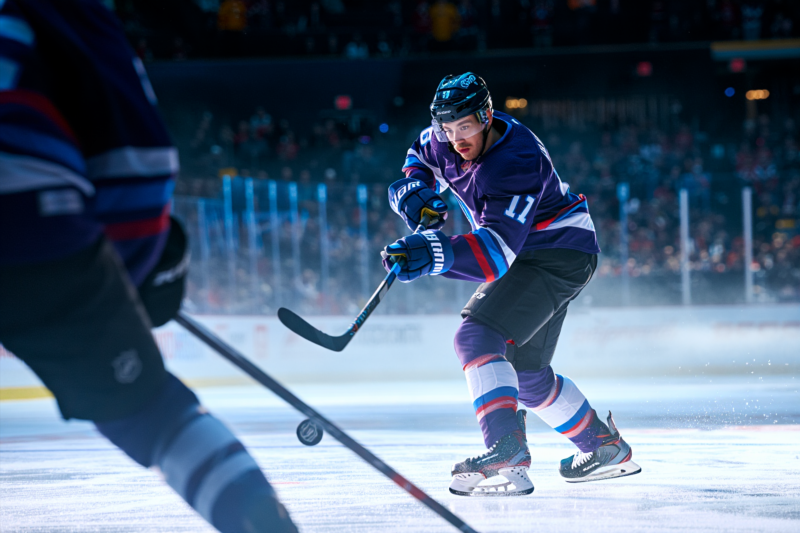
NHL Wrist Shot Mechanics Unlock Peak Performance and Precision
In the fast-paced world of professional hockey, the difference between a good shot and a great one often lies in biomechanics—the science of movement. For skilled players aiming to elevate their game, mastering the wrist shot’s mechanics can significantly boost accuracy, power, and overall performance. Understanding the biomechanical principles behind an NHL-level wrist shot unlocks the secrets to capturing peak precision on the ice. This article explores the intricate mechanics, from body positioning to limb coordination, providing insights rooted in sports science and neuromuscular optimization.
The Significance of the NHL Wrist Shot
The wrist shot is a versatile and powerful weapon utilized by players at all levels. At the NHL level, it serves as a rapid-fire, deceptive, and precise scoring tool. Its effectiveness depends on:
- Shot accuracy: Targeting corners or creating deception
- Shot power: Overcoming goalies’ reflexes
- Speed of execution: Minimizing time from puck control to release
Achieving peak performance requires a deep understanding of biomechanics, allowing skilled players to refine their technique systematically.
Biomechanical Foundations of a Powerful Wrist Shot
1. Proper Body Positioning and Stance
- Kinetic Chain Activation: The power of a wrist shot begins with the body’s kinetic chain—the coordinated transfer of energy from the legs through the core, arms, and finally to the stick.
- Feet Alignment: A staggered stance with knees slightly bent ensures stability and balance, enabling explosive movements.
- Weight Distribution: Shifting the weight slightly onto the back leg during the loading phase maximizes energy storage.
2. Puck Loading and Grip Mechanics
- Grip Optimization: A firm grip with relaxed hands promotes fluid motion. The top hand controls the angle, while the bottom hand provides power.
- Puck Position: Placing the puck slightly ahead of the body’s center facilitates faster wrist rotation and shot release.
3. The Wrist Rotation and Release
- Sequential Articulation: The wrist acts as the final “snap,” accelerating the puck toward the net.
- Biomechanical Motion: The rotation involves flexion and ulnar deviation, generating torque that adds velocity.
- Muscle Activation: The forearm and wrist muscles work synergistically, with rapid firing of the flexor carpi ulnaris and extensor carpi radialis muscles.
4. Follow-through and Accuracy
- Controlled Follow-through: A smooth, controlled follow-through directs power and precision.
- Targeting: Proper head alignment and eye focus are critical for accuracy, as visual input guides muscle coordination.
Enhancing Performance through Biomechanical Efficiency
Training Techniques for Skilled Players
- drills focusing on wrist flexibility and strength
- Video analysis to correct biomechanics
- Elastic band exercises to improve wrist and forearm explosiveness
- Simulated puck exercises for muscle memory development
Neuromuscular Considerations
- Motor Learning: Repetition with precision refines neural pathways, leading to more consistent shots.
- Proprioception: Enhancing awareness of limb position helps in fine-tuning shot mechanics under pressure.
Practical Tips for Players to Optimize Their Wrist Shot
| Tips | Explanation |
| Maintain balanced stance | Ensures stability and effective energy transfer |
| Use the whole body | Incorporate core rotation for increased power |
| Relax grip | Reduces tension, allowing for fluid movement |
| Focus on wrist snap | Maximize rotational torque for velocity |
| Practice targeting | Develop muscle memory for accuracy |
Frequently Asked Questions (FAQs)
Q1: How can I improve my wrist shot power?
A: Focus on full-body engagement—particularly leg and core rotation—while maintaining proper wrist snap. Strengthen forearm muscles with targeted exercises and practice shot mechanics regularly.
Q2: What common mistakes hinder wrist shot accuracy?
A: Common errors include poor stance, improper puck placement, tense grip, and lack of follow-through. Video analysis and coaching can help identify and correct these issues.
Q3: How important is equipment choice for wrist shot biomechanics?
A: Very. A properly fitted stick with the right flex and curve enhances control and power, aligning with your biomechanics for optimal shot performance.
Unlocking peak performance in your NHL-level wrist shot hinges on mastering its biomechanical foundation. By understanding how body positioning, limb coordination, and muscle activation interplay, skilled players can refine their technique to deliver more powerful, accurate, and deceptive shots. Incorporate these principles into your training and watch your on-ice shooting efficiency elevate to new levels. With consistent effort and biomechanical awareness, you can transform your wrist shot into a formidable scoring weapon and gain a strategic edge in the game.
Take Action Today
Start analyzing your technique with video review, integrate targeted strength and flexibility exercises, and apply these biomechanics insights in practice. Elevate your hockey game—because understanding the science behind your shot is the key to unlocking your full potential.
*Ready to take your shooting to the next level? Explore our advanced training modules, coaching frameworks, and performance analytics at RinkMajesty Network—your ultimate platform for elite hockey development.*