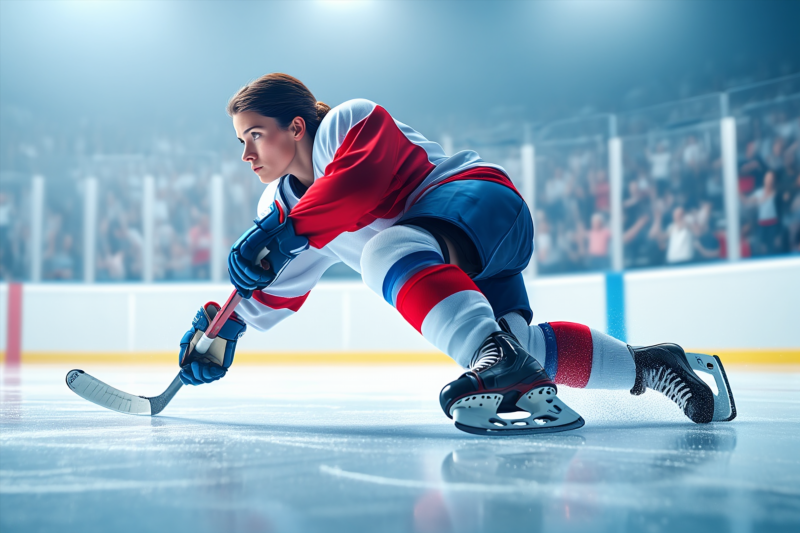
How Science Explains Cornering Speed and Control
How Science Explains Cornering Speed and Control
In the fast-paced world of hockey, mastering cornering speed and control is essential for players aiming to excel on the ice. Whether gliding seamlessly through tight turns or maintaining stability at high velocities, understanding the science behind edges, acceleration, and balance transforms ordinary players into elite performers. RinkMajesty Network explores these dynamics, offering advanced insights into how movement physics influence safety, agility, and performance at every level of play.
The Fundamentals of Edges and Their Role in Turning
What Are Edges in Hockey?
Hockey skates are equipped with two primary edges: the inside edge and the outside edge. These edges are the wheels of the skating technique, enabling nuanced control and powerful turns. Proper utilization of edges allows players to:
- Initiate sharp cornering
- Increase acceleration through precise weight transfer
- Maintain stability during high-speed maneuvers
How Edges Influence Turning Mechanics
Turning effectively relies on the engagement of the correct edge in coordination with body positioning. When a player leans into a turn, their weight shifts onto the corresponding edge, creating a grip that redirect the skate’s direction. This process involves:
- Edge Engagement: The contact of skate blades with the ice on an optimal angle, increasing friction and control.
- Weight Transfer: Moving body mass appropriately to the outer skate for leverage.
- Center of Mass Alignment: Maintaining balance over the pivot point to prevent slipping or loss of control.
Accelerating Through Turns: The Science of Edge Engagement
Rotational Dynamics and Angular Momentum
During a turn, athletes accelerate their rotation by leveraging angular momentum. This involves:
- Engaging the outside edge to generate centrifugal force
- Applying torque via body and skate positioning
- Increasing rotational velocity while maintaining stability
Utilizing principles from physics, players can optimize their convergence of force vectors for rapid, controlled acceleration around corners.
How Proper Edge Use Enhances Speed and Safety
Science shows that precise edge control enables players to:
- Minimize resistance and skid
- Maximize grip during sharp turns
- Reduce the risk of injury caused by sudden slips or imbalance
This balance between force production and stability hinges on an understanding of how to modulate edge pressure dynamically, especially under high-speed conditions.
Achieving and Maintaining Balance During Tight Turns
The Role of the Centre of Mass and Moment of Inertia
Stability in cornering relies on managing the body’s center of mass and the moment of inertia — the resistance to change in rotational motion. Key principles include:
- Lowering the Center of Mass: Bending the knees and leaning into the turn increases stability.
- Optimal Body Positioning: Forward-leaning posture helps counteract centrifugal forces.
- Controlled Weight Shifts: Smooth transfers prevent sudden shifts that could lead to imbalance.
How Balance Prevents Slip and Facilitates Faster Turns
Applying neuroscience and motor control science, athletes who develop internal proprioceptive awareness can:
- React swiftly to positional cues
- Adjust their edge engagement in real-time
- Achieve a harmonious balance that augments turning speed without sacrificing control
Techniques & Training Insights: Improving Edge Control for Better Cornering
| Training Focus | Benefits | How to Practice |
| Edge Drills | Enhances grip strength and precision | Use zig-zag drills on both inside and outside edges |
| Weight Transfer Exercises | Builds coordination between body and skate | Perform slow turns emphasizing smooth weight shifts |
| Core Stability Routines | Improves balance and power | Incorporate planks, balance boards, and rotational exercises |
| On-Ice Reaction Drills | Reinforces instinctive edge engagement | Practice quick directional changes and small turns |
Final Thoughts: Integrating Science into Effective Cornering
Understanding edges, turning acceleration, and balance through scientific principles empowers hockey players to navigate the ice with enhanced agility and safety. Mastering these dynamics reduces injury risks and unlocks faster, more precise cornering — a weapon at every player’s disposal.
For aspiring athletes, coaches, and fans eager to deepen their comprehension of on-ice movement, embracing these insights translates into skillful execution and strategic advantage — elevating the game to a new level.
Frequently Asked Questions
Q: How can I improve my edge control for better cornering speed? *Practicing edge drills consistently, focusing on proper weight transfer, and strengthening core muscles are essential steps. Video analysis can also help correct technique.*
Q: Why is balance so critical during high-speed turns? *Balance ensures stability and control, preventing slips or falls. It also allows for quick adjustments, enabling sharper, safer turns.*
Q: Can scientific principles really make a difference in my hockey performance? *Absolutely. Applying physics, biomechanics, and motor control science leads to more efficient movement, faster reactions, and injury prevention.*
By comprehending and applying scientific insights into edges, acceleration, and balance, hockey enthusiasts can unlock a new level of mastery — turning instinct, skill, and knowledge into ultimate on-ice performance. Explore these concepts further with RinkMajesty Network’s advanced hockey analytics and training frameworks.